30. Lisbon
“Lisbon was built by the Romans on a hill on the north bank of the River Tagus overlooking the greatest natural harbour on the coast of Atlantic Europe. For some 500 years a Moorish city with a large Christian (Mozarabe) and Jewish population, after being captured by English Crusaders, became capital of the new kingdom of Portugal. By the 14th century it had become an important commercial centre used by Venetians and Genoese for trade. (With its walled surroundings) Lisbon became the centre of an expanding state, and fortified palace in the central square of the Rossio… With la Casa da Guiné which administered the country’s overseas expansion in Africa… Vasco da Gama set out from Lisbon on his epic voyage to India in 1497. A new royal palace was built on the waterfront with other monumental buildings as the Misericórdia, the Estaus Palace, Customs House, Casa da India, Casa dos Escravos and the Armoury. A vast new Jeronimite monastic complex and a fortress to guard the entrance to the river were begun at Belem built in the exotic late Gothic Manueline style… and Lisbon became a centre of map making.”*
In the ‘Age of Discovery’, thanks to its location and natural harbour and building of Fort Bugio in mid estuary, it became the centre of its naval operations in the Atlantic as well as for the dispatch of trading ships beyond to the east.
From the Azores to Africa and beyond, its areas of influence stretched from South America and Brazil where its reach was divided westwards with Spain under the ‘Law of the Indies’ and opposingly across to the Far East, India and the East Indies.
However, it was the devastation caused by the great earthquake of 1755 that was to destroy the city from which a major programme of rebuilding was to be undertaken under the direction of the Marques de Pombal.
The whole central commercial district was rebuilt and lower town of Baixa Pombelina along with new street axes such as Avenida da Liberdade leading to Parque Eduardo VII.
From these efforts new districts were created having particular character and with delightful squares such as Praça dos Restauradores, Praça da Rossio, de Figueira and Praça do Comercio with their patterned pavements and curvilinear mosaics of limestone and basalt pieces.
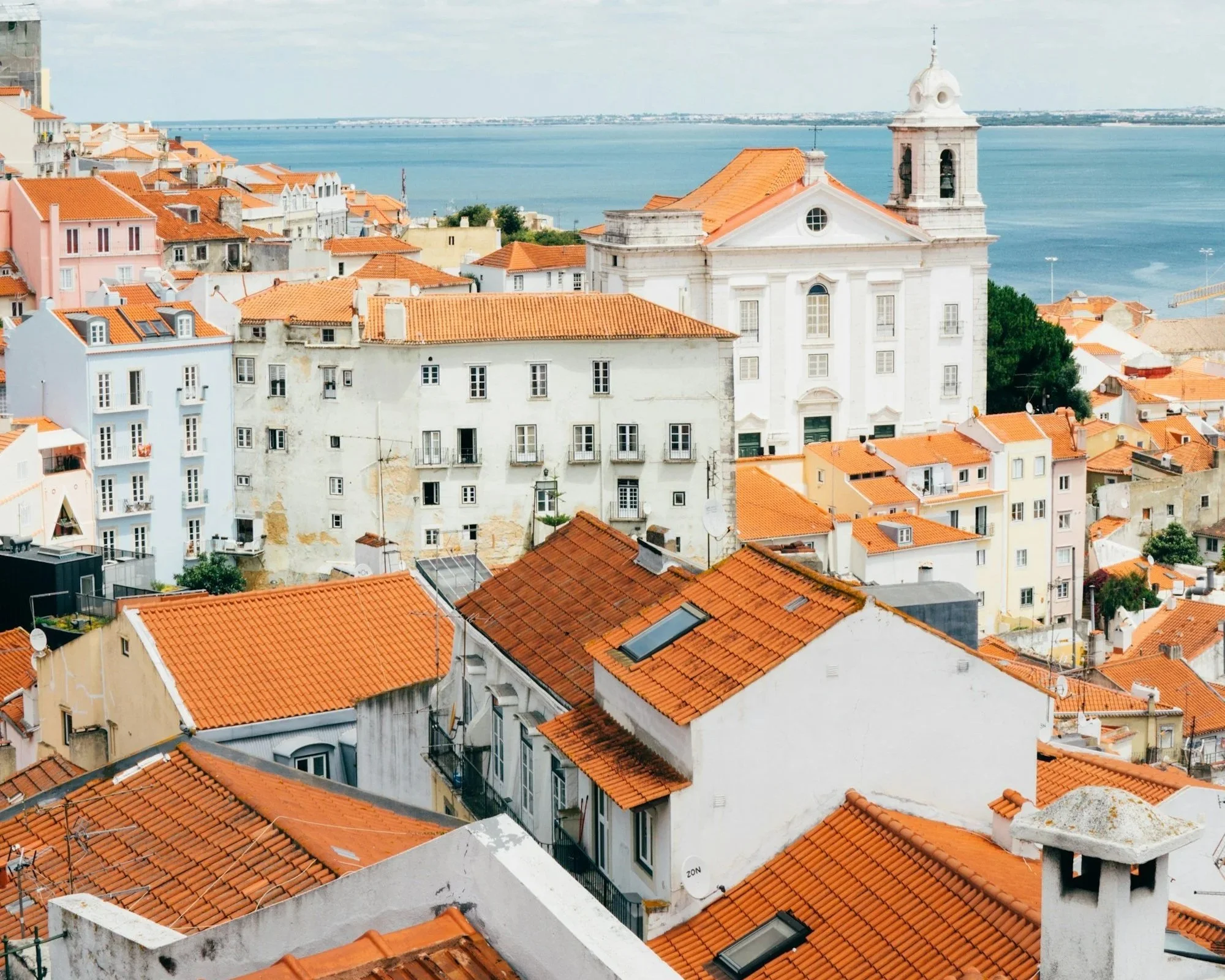
Buildings with white facades and walls covered in blue ceramic tiles, azulejos, and with their terracotta roof tiles create a distinctive image of vernacular building across the city.
From the centre of Baixa-Chiado and moving northwards along the eastern edge of the city, Lisboa Oriente contains the former dock areas and warehousing.
With their demise, this area has been totally transformed since the holding of Expo ’98.
With its proximity to the international airport and construction of the long bridge and viaduct of Ponte Vasco da Gama across the bay to Montijo opposite, this area has been transformed for commercial and tourist activities with the Marina and Oceanário.
The extension of Lisbon Metro and improvement of public transport facilities accordingly has led to the embellishment of the entire waterfront district.
*Malyn Newitt – A History of Portuguese Overseas Expansion (1400-1688) – Routledge, 2005.